
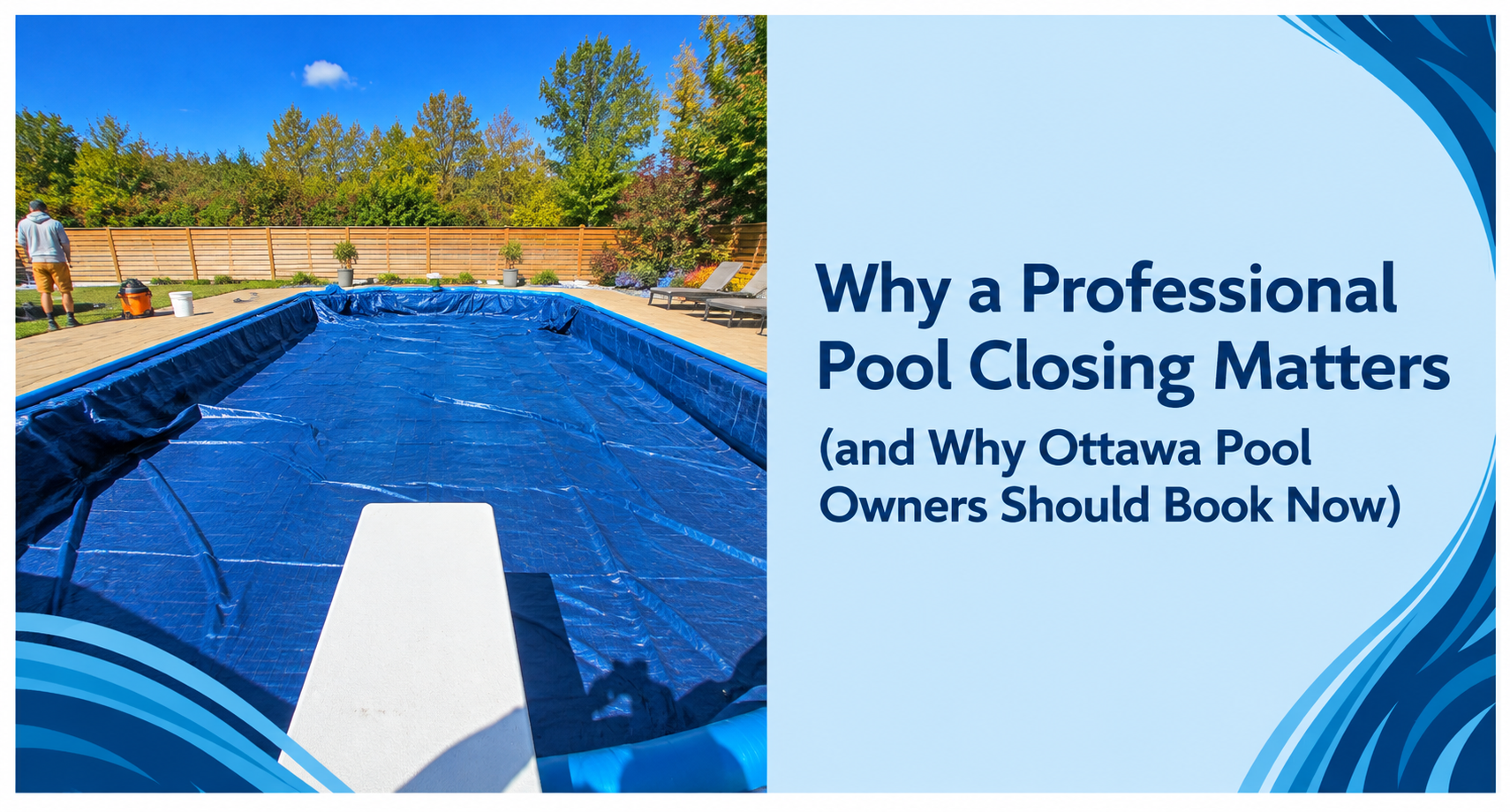
Why a Professional Pool Closing Matters (and Why Ottawa Pool Owners Should Book Now)
Author: Garrett Incze, CPO-Certified Senior Technician | GBI Pools & Services[Text Wrapping Break]GBI Pools & Services | 112 John Cavanaugh Dr., Carp, Ontario | gbiservices.ca
Garrett holds Certified Pool Operator (CPO) certification and TSSA gas contractor licensing (Licence FS-R 5174). He leads the service team at GBI Pools and has spent decades opening, diagnosing, and repairing pools across Ottawa and the Ottawa Valley. GBI Pools is a proud member of the Pool & Hot Tub Council of Canada.
Summary
Pool closing in Ottawa helps protect plumbing, equipment, and pool components from winter freeze damage. This guide explains when to close your pool, why proper winterization matters, and which steps professionals use to prepare a pool for colder weather. It also covers water temperature, winter covers, equipment protection, and common risks associated with closing too late.
Key Highlights
- Protect plumbing and equipment by removing water before freezing temperatures arrive
- Reduce costly spring repairs by properly winterizing vulnerable pool components
- Monitor water temperature and close once it consistently falls below 15°C
- Prepare pool water with appropriate winterizing chemicals before the off-season
- Choose closing procedures based on your pool equipment and winter cover
The leaves are turning, the mornings are getting colder, and in a few short weeks Ottawa will see its first hard frost. If your pool is still open, now is the time to get it ready for winter.
Closing your pool is about much more than putting on the cover. Done properly, it protects your plumbing, your equipment and your liner from the freeze-thaw cycles of an Ottawa winter. Done poorly, or too late, it can leave you with cracked equipment and a repair bill waiting for you in the spring.
Below, we explain why a professional closing matters, what the GBI team does at every closing, and why booking now is the smartest move you can make this fall.
Why a proper pool closing is so important
Water expands when it freezes. Any water left sitting in your pool’s plumbing lines, pump, filter or heater can freeze over the winter. As it expands, it can crack pipes, split pump housings and damage filters and heaters. That damage often stays hidden until opening day in the spring.
Winter damage is expensive. A poorly closed pool can suffer burst plumbing lines, cracked filters or heaters, and structural damage to the liner. Repairs like these cost far more than a professional closing.
Balanced water makes spring easier. A closing isn’t only about the equipment. Adding the right winterizing chemicals, including algaecides, shock treatments and stabilizers, helps keep your water in better shape through the off-season. That means fewer surprises, and less work, when it’s time to open again.
The right water level protects your pool. Depending on your pool and cover, lowering the water below the jets helps prevent freeze damage to the skimmer and return lines.
The goal is simple: properly protect your pool now, so there are fewer surprises next spring.
Watch: what happens during a GBI pool closing
See our team in action. This short video walks you through the steps our technicians follow to get an Ottawa pool safely through the winter.
What a professional GBI pool closing includes
Every GBI closing takes care of the key winterization steps for you:
- Blowing out the entire pool plumbing system
- Adding antifreeze to plumbing lines and the pump
- Installing winter plugs and protecting the skimmer from ice
- Draining water from the filter and pump
- Winterizing your gas heater and pool lights
- Removing and storing filter cartridges, salt cells and ladders
We can also winterize salt systems, attached spas, waterfalls, solar heating and other pool features.
Choose the 2026 closing package that fits your pool
| Package | What it covers | Price |
|---|---|---|
| No Cover Pool Closing | Full winterization of plumbing and equipment | $319.99 + HST |
| No Cover + Drain | Everything above, plus lowering the water below the jets | $424.99 + HST |
| Pool Closing + 1 Cover | Everything above, plus installing one winter cover and positioning water bags | $599.99 + HST |
Safety cover owners receive a discount on the Pool Closing + 1 Cover package. Add-ons such as salt cell cleaning, filter cartridge cleaning and extra cover installation are also available. See full package details.
When should you close your pool in Ottawa?
The best time to close is when your water temperature consistently drops below 15°C (59°F). In Ottawa, that usually means mid-September through October, and we’re right in the middle of that window now.
Closing too early can invite algae while the water is still warm. Waiting too long is the bigger risk. One sudden cold snap can freeze water in your lines before your pool is winterized.
Only a few weeks left: why you should book now
Our fall schedule is filling up fast. As colder weather gets closer, our remaining 2026 closing appointments are limited, and the best dates go first.
Booking now means you:
- Secure a date before the first hard frost
- Avoid the last-minute rush when openings run out
- Take one more job off your fall to-do list
- Head into spring knowing your pool was properly protected
Book your 2026 pool closing today
Let the GBI team make sure your pool is ready for the winter ahead. Serving Ottawa and the Ottawa Valley.
Prefer to talk to someone? Call us at 613-797-7665 or email info@gbipools.com. Office hours are Monday to Friday, 8 AM to 4 PM.
Frequently Asked Questions
When should you close a pool in Ottawa?
A pool should generally be closed when the water temperature consistently falls below 15°C or 59°F. In Ottawa, this typically occurs from mid-September through October. Closing too early can encourage algae growth in warmer water, while closing too late may expose plumbing and equipment to freezing temperatures.
What happens if you close your pool too late?
Waiting too long to winterize a pool can leave water trapped inside plumbing lines, pumps, filters, heaters, or skimmers when freezing temperatures arrive. Because water expands as it freezes, trapped water can crack pipes or damage equipment. Some winter damage may remain unnoticed until the pool is reopened in spring.
What does a professional pool closing include?
A professional pool closing typically includes blowing water from plumbing lines, draining the pump and filter, installing winter plugs, protecting the skimmer, and winterizing equipment such as heaters and lights. Depending on the pool, the process may also involve lowering the water level, removing ladders, and winterizing salt systems or additional features.
Do you need to lower the water level when closing a pool?
Whether the water level should be lowered depends on the pool design, plumbing, and type of winter cover. For some pools, lowering the water below the return jets helps protect plumbing and makes winterization easier. The appropriate level should be determined according to the pool configuration and winter cover requirements.
Why are pool plumbing lines blown out before winter?
Pool plumbing lines are blown out to remove water that could freeze during winter. Any remaining water can expand when frozen and place pressure on pipes, fittings, and connected equipment. Clearing and protecting the lines reduces the risk of freeze-related damage during Ottawa’s winter and helps prepare the system for spring reopening.